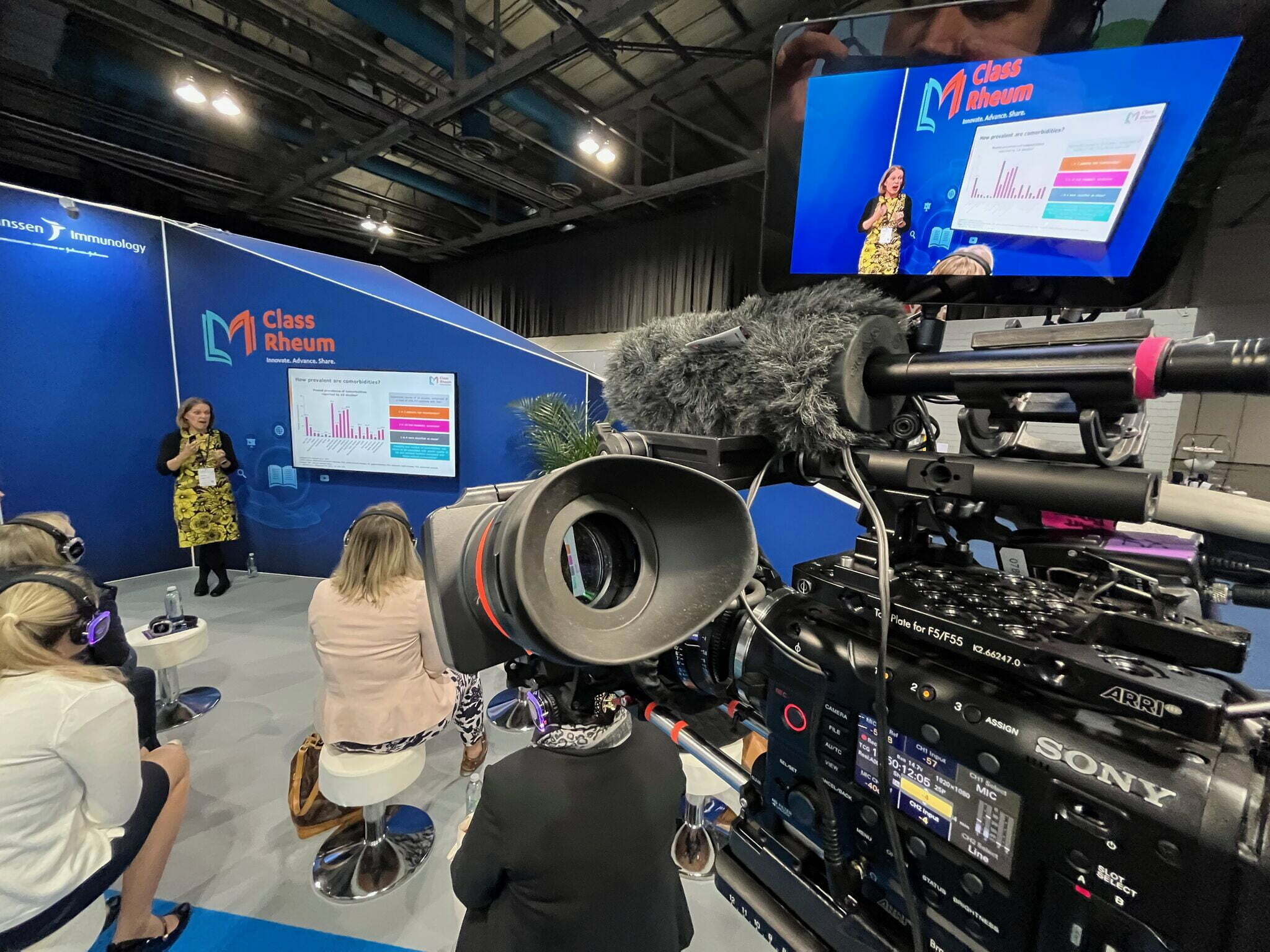
Before the world was plunged into pandemic-induced lockdowns, the events industry looked a whole lot different to how it does today.
Corr, writing statements like that makes us feel like we’re talking decades ago, not a few years—but without COVID-19, that’s the length of time you would expect given the scale of transformation that’s happened since March 2020.
We think we speak for everyone when we say that, in the earlier stages of the pandemic, it was hard to see that the changes would ultimately be for the better. But with social restrictions behind us (fingers crossed!), we’re looking at a whole new formula for event planning, that has led to predictions for a huge increase in the value of our industry.
So let’s take a looking at how Covid-19 has transformed the industry, by taking a look at the timeline of events that the industry has faced, and how it’s impacted the industry’s valuation.

before the pandemic
In 2019, the business events industry was estimated to have been worth £19.4bn in the UK—and in 2020, it was worth $95.3bn in the US. In-person, face-to-face events ruled the landscape with no immediate plans for that to drastically change. Most organisations had a sustainability angle, but many found it difficult (or didn’t know how) to lower their carbon footprint while still delivering an engaging, memorable event—not to mention shipping over international delegates!
But then along came COVID-19.
Hitting the industry like a wrecking ball and completely derailing event plans for the foreseeable future. With such a heavy reliance on in-person events, organisations had to rethink and readapt their approaches. When getting two people from different households into the same room was off the cards, you can imagine how the event space was feeling! And with no visible end in sight, playing the waiting game wasn’t an option…

during the pandemic
During the lockdown, at its lowest point, spending in the UK events industry dropped by 80% of 2019 levels. But that didn’t necessarily mean we all stopped planning! Instead, we planned a new kind of event—one that made use of virtual means to connect hosts with their stakeholders. And whilst the concept of video calling was by no means a new one, using it as the primary means of delivering a business event was.
But it worked.
It really worked.
Despite the countless number of accidentally muted microphones and cat-themed filters, virtual events really worked, and the mass adoption of the webinar-style approach was well and truly underway. As the industry adapted, tech knowledge increased, and new ways of engaging attendees (before, during and after the event) were created. And after enough time had passed in the new normal, an extra set of virtual planning skills weren’t the only benefits realised…

after the pandemic
There’s no doubt that the business events industry took a monumental hit during the pandemic. But every cloud has a silver lining—and we were fortunate that ours had an extra thick one. What seemed like a stopgap turned out to be a secret weapon that would fuel the new-look events landscape that we find ourselves at the forefront of today.
Virtual events showed us that you don’t need to be in the same room as your attendees to engage them. In fact, by connecting virtually, we were able to reach more people than ever. This new audience was unbound by logistical constraints and provided more accessibility than ever before.
Financial limitations were no longer the biggest issue. Visa restrictions didn’t limit attendees. Venues weren’t a worrying concern for those with mobility requirements—and for those with audio and visual requirements? The online platforms were fully functional and able to assist with their requirements. And on the sustainability front, the environmental impact of planning and delivering a virtual event was reduced massively! This spelt a win for organisers whose sustainability goals were brought right into focus. And it was also a win for the sky-rocketing number of eco-conscious attendees who might have previously thought twice about hopping on a plane to make an event.
So, as COVID-19 restrictions began to drop and face-to-face events rose again, organisations and their event planners simply had to find a way to get the best of both worlds—and it’s here that the hybrid event was born.
Seeing people back in sold-out venues was a sight for sore eyes, and those who couldn’t make it in person didn’t have to. In fact, there are many who chose not to attend by choice. With the mass adoption of hybrid working, hybrid events made perfect sense to a lot of people. With communities being given the flexibility of deciding whether to attend virtually or physically.

what’s next for the event industry?
There’s no doubt that the ability to reach a wider audience on a virtual platform, combined with the return of face-to-face, is creating a winning combination that’s set to drive the market into the stratosphere. And as event planners find new and more innovative ways to meet their goals and objectives, more investment is predicted to be poured into the industry.
So where does the event industry valuation stand at the moment? Nobody’s exactly sure, but the path forward looks promising to say the least. By 2026, the business events industry is estimated to be worth £27.6bn in the UK (a 43% increase in 2019) – and by 2030, worth $510.9bn in the US.
And we know one thing for sure—if Covid-related restrictions were to come back, the events industry would be ready for it. From strategy workshops to hybrid toolkits, we can help you put on a wide range of event types and thrive in the post-pandemic event space.
As for what’s next for the events industry—we asked the world’s leading experts in events all about that.
But you’ll need to click here to read that.