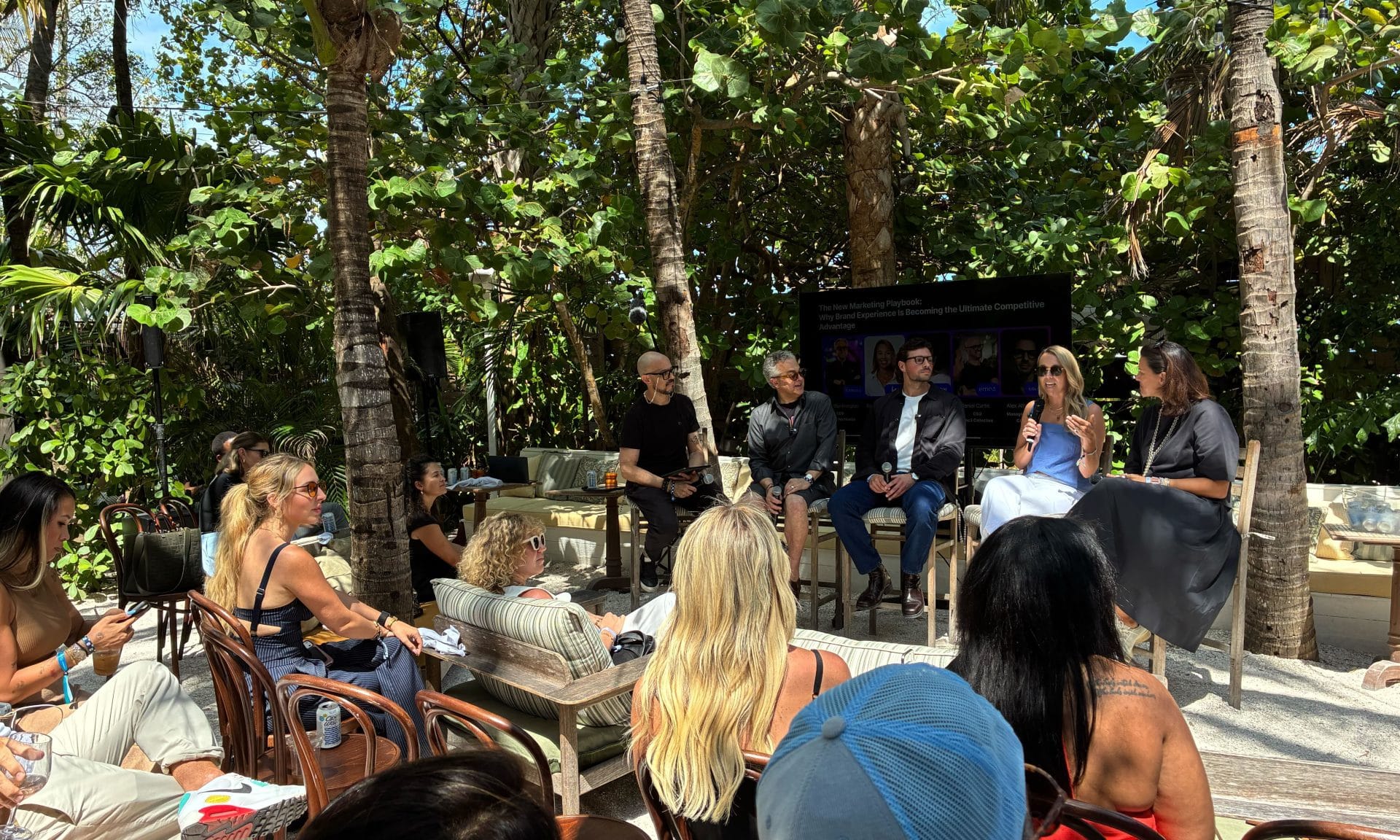
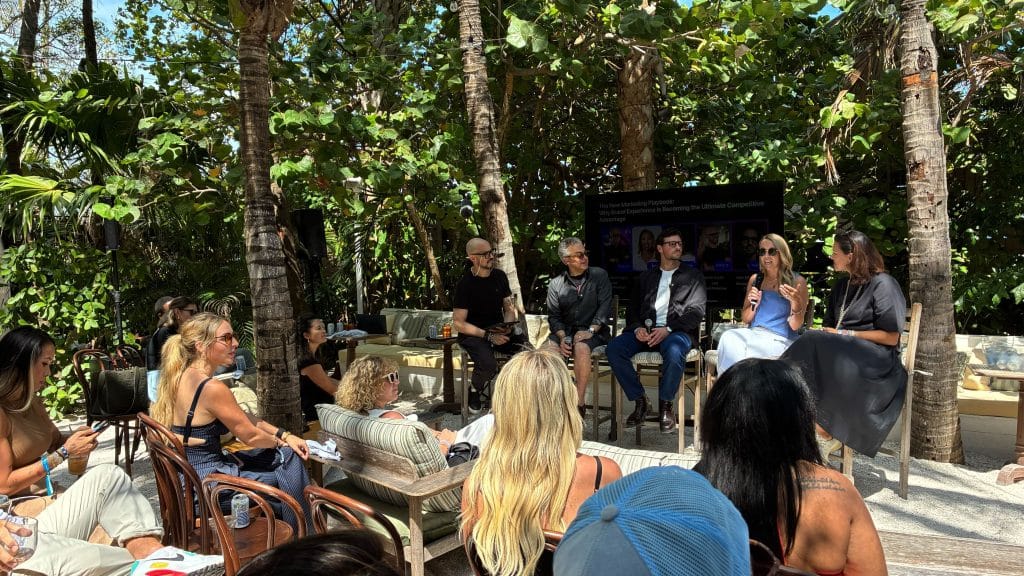
At Pulse Miami, leaders across media, experiential and PR came together to explore how AI is changing the role of live events – and why the brands that win will be the ones that know how to host, curate and build community with intention.
The conversation moved quickly across AI, live events, content, scarcity, belonging, community and trust. But the clearest message was this: audiences are becoming more selective with their time, more sceptical of what they see online and more drawn to experiences that feel intentional, useful and genuinely human.
The question is how to create moments people want to enter, remember and share.
The future of experiential marketing
The future of experiential marketing will be built around relevance, rhythm and human value. The strongest brand experiences will use AI to remove operational friction, but they will rely on people to create the moments that matter.
For event leaders, marketing teams and brand directors, Pulse Miami surfaced a clear shift: live experiences are no longer a single moment in the marketing calendar. They are becoming content engines, trust builders, community platforms and commercial infrastructure.
1. AI is making live experiences more valuable
A lot of AI conversations still focus on replacement. What tasks can AI take over? What content can it generate? What efficiencies can it unlock?
Pulse Miami offered a more useful way to think about it.
Ryan Harwood, CEO of Gallery Media Group and AMARA Group under VaynerX, described AI and analog experiences as a “barbell”. On one end, AI helps with the operational weight: research, audience curation, RSVP management, content distribution, follow-up and personalisation. On the other end, live experience becomes even more valuable because it delivers what AI cannot: presence, chemistry, shared memory and co-created meaning.
AI can make the planning process smarter. It can help identify who should be in the room, what they care about, how to personalise the journey and how to turn one experience into a wider content ecosystem. But the room itself still relies on craft. The welcome. The pacing. The atmosphere. The conversations that happen because the right people are placed in the right environment.
For brands exploring AI in event strategy, the best question is not “what can we automate?” It is “where can AI give our teams more space to design better human experiences?”
2. Human connection is becoming a competitive advantage
Lisette, who brings years of experience across beauty, liquor, fragrance and airport retail, put it simply: humans are wired to crave community.
That may sound obvious, but it is easy to forget when marketing teams are under pressure to optimise journeys, automate touchpoints and generate more content at speed.
The more digital spaces become crowded with AI-generated material, the more value people will place on interactions that feel real. This is especially important for sectors where trust, taste and emotion drive decision-making. Luxury, beauty, travel retail, hospitality, healthcare, technology and B2B all depend on moments where people need to feel confident, understood and connected.
That is why human-centred event design matters. It gives brands a way to create connection with more care, more purpose and more commercial value.
3. The strongest brands invite people into a world
One of the most useful shifts from the Miami discussion was the move away from targeting language.
People know when they are being chased. They know when a brand has followed them around the internet. They know when an experience has been designed around conversion rather than connection.
Lisette’s point that people want to feel invited into a world is a sharper way to think about brand experience.
Invitation changes the energy of the brief. It asks better questions:
- Who is this experience really for?
- What world are we asking them to enter?
- Why would they want to stay?
- What do they get here that they cannot get elsewhere?
- How should they feel when they leave?
For B2B brands, that could mean moving away from broad, over-programmed events and towards more curated rooms built around relevance and mutual value. For B2C brands, it could mean creating retail, hospitality or pop-up experiences that feel less like activations and more like cultural invitations.
4. Scarcity and curation are becoming more powerful than scale
Dani Van Dusen, founder of Artist and the Machine, spoke about the power of capping events, designing for intentionality and choosing not to document everything.
That is a brave idea in a marketing culture obsessed with proof, reach and asset capture. But it is also increasingly relevant.
When everything is recorded, posted and repurposed, the value of being in the room can start to flatten. The best experiences often carry a degree of scarcity. A feeling that something happened there, between those people, in that particular setting, that could not be fully replicated on a feed.
That does not mean brands should stop capturing content. It means they need to be more deliberate about what gets shared and what stays with the people who were there.
Scarcity works when it is earned through quality. A smaller room can create more value than a larger audience if the guest list is stronger, the conversation is better and the follow-up is more meaningful.
For event leaders, this is an important budget conversation. Bigger is not always better. More content is not always more impactful. The question is whether the experience creates something people value enough to remember, talk about and return to.
For brands planning premium brand experiences or invitation-only moments, scarcity should be treated as a design choice, not a capacity issue.
5. Community needs cadence, not campaign thinking
The Miami sessions also made a strong case for community as infrastructure.
Community is often treated as a label brands can attach to an audience once enough people have signed up, followed, bought or attended. But as Zach Nadler noted, there is a real difference between a community and a group of customers.
That difference comes down to participation, rhythm and belonging.
A community needs reasons to keep showing up. It needs rituals, shared language, useful exchanges, recognisable hosts and a sense of forward motion. It cannot rely on one flagship moment a year and expect people to stay emotionally invested.
Brand communities are built through repeatable touchpoints. Smaller gatherings. Ongoing conversations. Content that extends the life of the room. Follow-up that feels considered. Invitations that build on what came before – turning an event from a moment into a system.
For brands planning 2026 and 2027 programmes, the question should not only be “what is the big thing we are doing?” It should be “what rhythm are we creating, and why would people want to keep coming back?”
6. Every event needs a content strategy built in
One of the most practical takeaways came from Ryan Harwood’s point around “Events for Content”: if an experience only lives for the people in the room, the brand has probably missed a major opportunity.
Before the event, content can build anticipation, clarify the invitation and help the right audience understand why the experience matters. During the event, capture should focus on the moments that communicate energy, insight, emotion and proof. Afterwards, the story needs to continue through clips, quotes, takeaways, thought leadership, sales assets and follow-up conversations.
This is especially important for B2B brands. A well-designed dinner, roundtable, user conference or leadership summit can feed months of sales enablement, social content, internal comms, customer proof and pipeline follow-up. The value is rarely contained within the event day itself. It sits in how well the experience is designed, captured and amplified.
That is why event content strategy should be built into the brief early, not added once the agenda is already locked.
What does this mean for brand and event leaders?
Pulse Miami made one thing clear: the next phase of brand experience will be won by teams who can combine technology, creativity and human understanding without losing sight of why people show up in the first place.
AI can make the machine smarter. It can help teams plan faster, personalise better and distribute more intelligently. But the emotional value of an experience still comes from what happens between people.
That means brands need to think less like broadcasters and more like hosts.
A host understands who should be in the room. A host knows how to make people feel comfortable, curious and included. A host thinks about the moments before and after the main event. A host creates the conditions for connection without over-controlling the conversation.
That is the new competitive edge.
Because as content becomes easier to make, attention becomes harder to earn. And in that environment, the brands people remember will be the ones that create experiences worth being part of.
Ready to rethink your event strategy?
If you are planning your next brand experience, now is the time to think beyond the event day.
Explore emc3’s event strategy approach, discover more thinking in the Pulse content hub, or attend our next Pulse session.