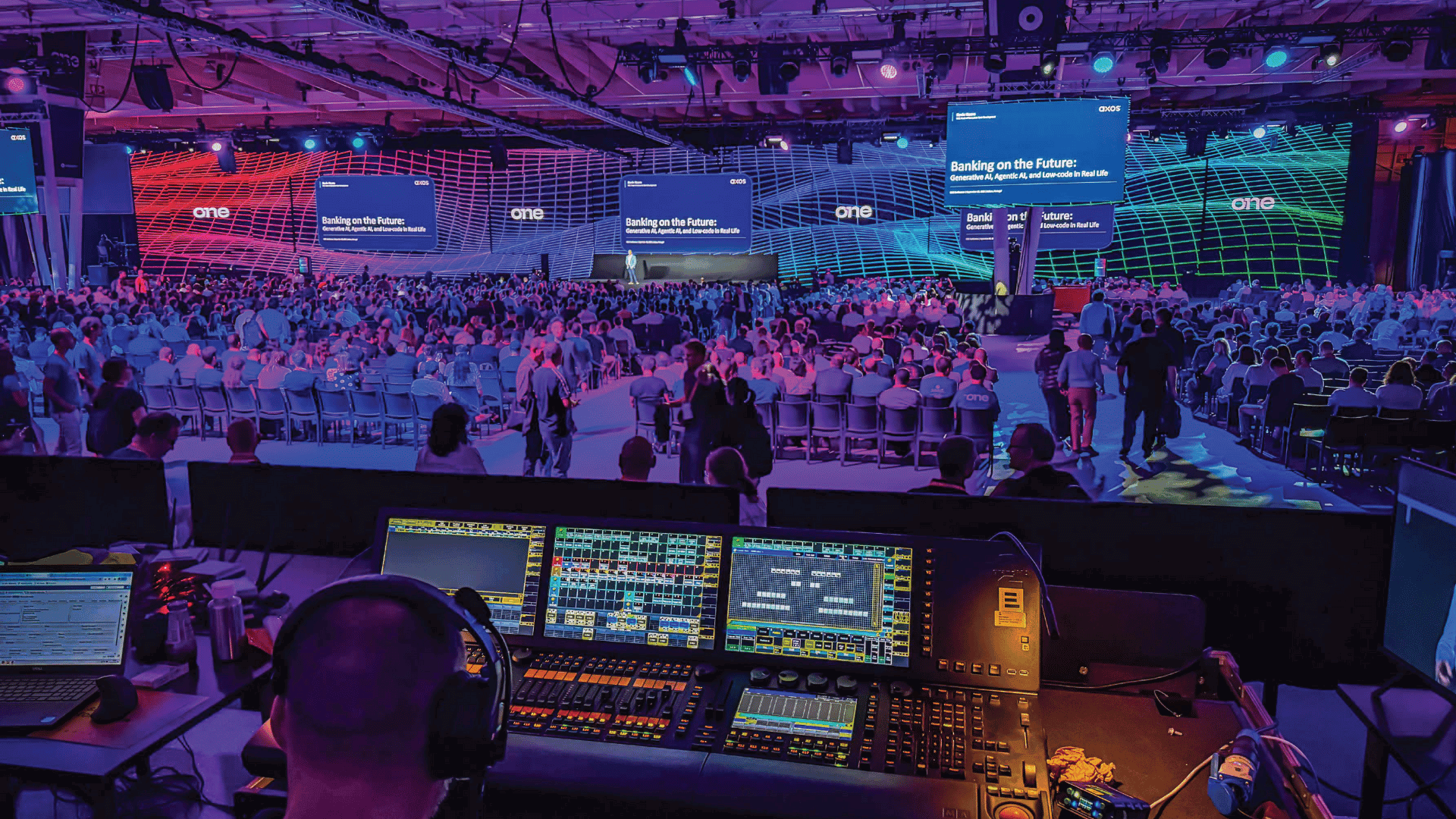
There’s a silent truth in most organisations: a kick-off feels important in the moment, you walk out fired up, then walk straight back into last year’s way of working without questioning a thing.
Human beings don’t retain information because it’s impressive. We retain what is structured, repeated with intent, and reinforced through use. We remember what helps us make sense of complexity and reduce uncertainty. If a kick-off doesn’t do that, it becomes a moment that fades instead of one that builds momentum.
This applies whether you’re aligning internal teams, launching a B2B strategy, or shaping a consumer narrative at scale. Different audiences, same human architecture.
Where most kick-offs miss the mark
People don’t remember events as a single continuous experience. We store them as a sequence of meaningful segments – moments that signal change, clarity or consequence. How we encode, segment and recall experiences isn’t random; it determines whether an event becomes something we act on, or something we forget.
A kick-off that works is designed with this in mind. It doesn’t overload. Content is structured so that ideas build, reinforce and reappear in different forms. Strategy isn’t introduced once and moved on from; it’s threaded through narrative, discussion and application so that it becomes cognitively familiar.
Strategy before showtime
Measurement that begins post-event tends to measure reaction, not impact.
The more useful question should be decided much earlier: how do we intend to change behaviour after this kick-off for the strategy to succeed?
That difference might look like:
- Faster or more consistent decision-making
- Fewer conflicting opinions of priority
- A shared language that removes ambiguity across teams or regions
- Clearer confidence in how strategy translates into action
If these signals aren’t defined upfront, measurement collapses into attendance, satisfaction and engagement – all of which can be high while alignment remains low.
This is why we run strategy workshops before designing any kick-off – to define what are the objectives, what must change, and how success will be measured before content is created.
How do you know your kick off landed?
When a kick-off lands, you don’t need to wait months to see it.
Clarity of narrative:
People use common language to describe priorities without referencing the slides or scripts. Shared vocabulary isn’t vanity; it signals common encoding of ideas.
Decision patterns:
Decisions align more consistently to strategy. Conflicts reduce. Are teams spending less time debating what to do and more time debating how to do it?
Behavioural adoption:
Tools, frameworks or processes introduced at the event are used in real work, not left to gather digital dust.
Traditional surveys might tell you people enjoyed the experience. Strategic measurement tells you something more useful:
- What people understand
- What they intend to do
- What they actually do differently
Early metrics should be structured around these outcomes, not headcounts or applause. And remember, without reinforcement, everything decays. Classic memory research shows that people can lose up to 70–90% of new information within a week if it isn’t reinforced.
What are you measuring?
In events and strategy, numbers tell half the story:
Quantitative measures show what changed – attendance, engagement, content usage.
Qualitative insight reveals why it did or didn’t – where understanding broke down, which messages stuck, what sparked real discussion beyond the room.
If your measurement only counts clicks, you’re measuring attention. If it surfaces understanding and alignment, you’re measuring impact.
Measure what changed, not what entertained
If a kick-off moment doesn’t change how people make decisions, communicate strategy, or prioritise work, it hasn’t changed anything.
You might have chosen an exciting new venue, brought in a renowned keynote speaker, and pulled a blinder with the social content afterwards. Those things don’t solidify your message – they’re great for creating energy, attention and connection. But if the part people remember is the entertainment, rather than the direction, the opportunity wasn’t fully realised.
When measurement is tied to strategy, content becomes a vector for change. Leaders start making aligned decisions. Teams start speaking the same language. Execution becomes clearer. And the next kick-off isn’t a reset – it’s a continuation.
That’s how you make every moment count.